

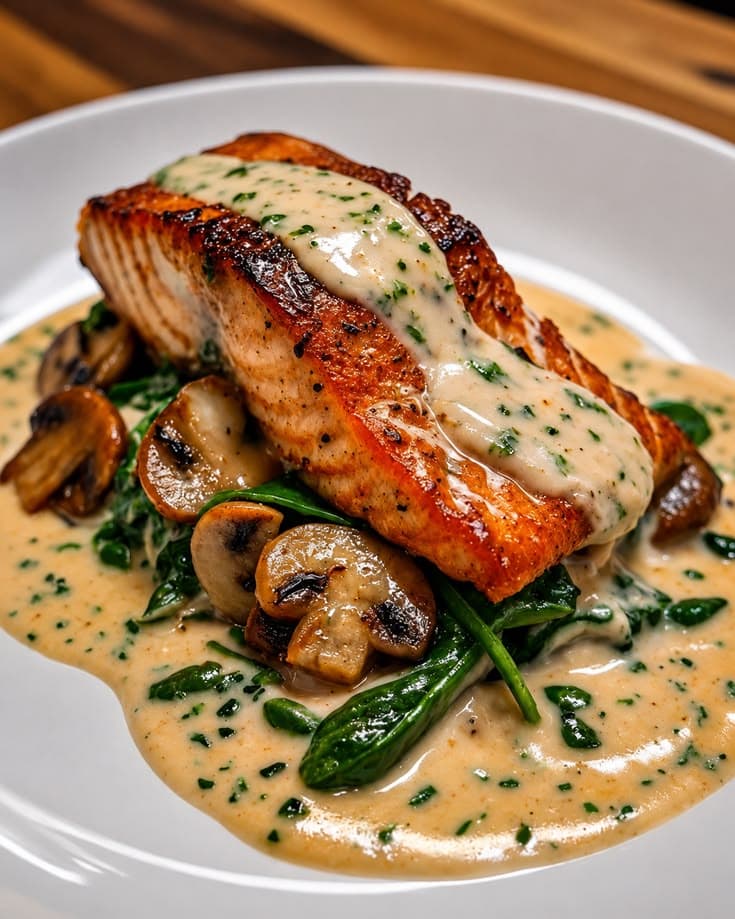
Salmon is one of the easiest fish to cook and one of the easiest to overcook. The difference between dry, chalky fillets and tender, flaky ones usually comes down to three things: how dry the fish is, how hot the pan is, and knowing when to stop.
None of these rules need special equipment. A good frying pan, a spatula and a little patience are enough.
Start with a dry fillet
Moisture is the enemy of a good sear. Pat the salmon dry with kitchen paper, season it with salt, and leave it uncovered in the fridge for 15 minutes. The surface browns faster and the flesh underneath stays juicy.

Use medium-high heat, not maximum heat
A smoking-hot pan burns the outside before the centre is cooked. Heat a thin layer of oil over medium-high heat, lay the fillet in skin-side down, and press it gently with a spatula for 10 seconds so the skin stays flat.
The fish tells you when it’s ready. It releases from the pan on its own. If it sticks, it isn’t done.
Cook it skin-side down for most of the time, about 4–5 minutes, until you can see the colour change most of the way up the side. Flip it and give it just 1–2 minutes more.
Pull it early and let it rest
Salmon keeps cooking after it leaves the heat. Take it off when the centre is still slightly translucent, around 52°C (125°F) if you use a thermometer, and rest it for two minutes.
- Pat dry, salt, and chill uncovered for 15 minutes
- Medium-high heat with a thin layer of oil
- Skin-side down, and don’t move it
- Flip once, for 1–2 minutes
- Pull at 52°C (125°F) and rest for two minutes


